
 Keeping your boat shipshape!
Seasonal Prep · AftLog Blog
Keeping your boat shipshape!
Seasonal Prep · AftLog Blog
Fuel Storage Best Practices
Fuel is the lifeblood of your engine — but it degrades quickly when stored. Here's how to store boat fuel properly, prevent ethanol problems, and keep your engine safe through winter.
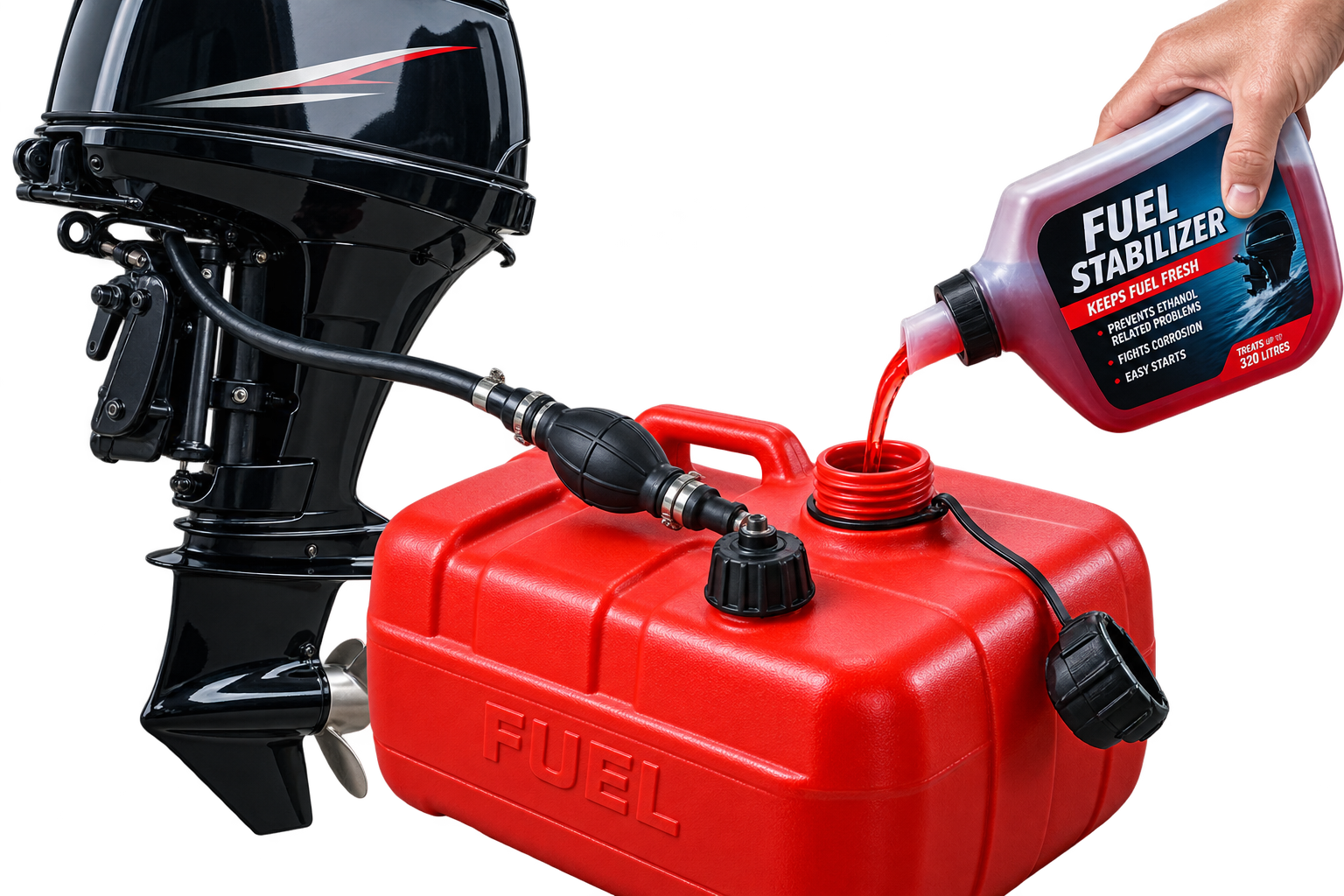
Fuel is the lifeblood of your outboard engine. But gasoline — especially ethanol-blended fuel — degrades quickly when stored. Over time, fuel absorbs moisture, separates, forms varnish, and loses volatility. Poor fuel storage is one of the most common causes of hard starting, rough idle, stalling, and springtime engine trouble.
Whether you're storing your boat for winter, keeping fuel in portable tanks, or managing fuel for a full season, proper storage protects your engine and prevents expensive repairs. This guide explains how fuel degrades, how to store it safely, how to prevent ethanol problems, and how AftLog helps you track fuel health.
Why Fuel Storage Matters
Gasoline begins degrading within 30–60 days, especially ethanol blends (E10). As fuel ages it suffers moisture absorption (ethanol attracts water, causing phase separation, corrosion, poor combustion, stalling, and injector damage), phase separation (a water-ethanol layer at the tank bottom and a low-octane layer above — engines draw from the bottom, the worst part), varnish formation (sticky deposits that clog carburetors, injectors, fuel pumps, and filters), loss of volatility (hard starting, rough idle, misfires), and corrosion in tanks, lines, fittings, and carburetor bowls.
Part 1 — Choosing the Right Fuel
Most boaters use E10 because it's widely available, but it requires careful storage. Non-ethanol marine fuel, when available, is ideal for long-term storage, small outboards, carbureted engines, and seasonal boats. On octane: use what your engine manufacturer recommends — freshness matters more than octane.
Part 2 — Fuel Stabilizer: Your Best Defense
Stabilizer is essential for any fuel stored longer than 30–60 days. It slows oxidation, prevents phase separation, reduces moisture absorption, protects injectors and carburetors, and keeps fuel fresh for 6–12 months. Add it before winter storage, before storing portable tanks, before long periods of inactivity, or whenever fuel may sit more than 60 days. Add stabilizer, fill with fresh fuel, then run the engine 5–10 minutes so treated fuel reaches the carburetor, injectors, and fuel pump.
Part 3 — Storing Fuel in Boat Tanks
- Fill the tank 90–95% full — reduces condensation; leave a small air gap for expansion.
- Add stabilizer — treat the entire tank.
- Run the engine — circulate stabilized fuel.
- Close the tank vent (if safe) — check manufacturer guidance.
- Inspect the tank — corrosion, leaks, loose fittings, cracked hoses.
- Store the boat level — prevents water pooling in the tank.
Part 4 — Storing Fuel in Portable Tanks
Portable tanks need special care: empty or fill them entirely (never half-full — half-full promotes condensation), store indoors to avoid temperature swings, use stabilizer on all portable fuel, inspect the cap seal (a damaged seal lets moisture in), check the primer bulb (replace if cracked or soft), and safely dispose of fuel older than 6–12 months.
Part 5 — Fuel Lines and Filters
Fuel lines degrade over time, especially with ethanol. Inspect for cracks, stiffness, leaks, soft spots, or discoloration. Replace fuel filters annually (fall is best), check the primer bulb (firm when squeezed), and inspect the tank vent (clear and functioning).
Part 6 — Carbureted Engines vs. EFI Engines
Carbureted engines are more sensitive to old fuel — varnish forms in jets, bowls, and floats, so drain carburetors before long-term storage. EFI engines are more tolerant, but injectors can still clog, so stabilizer is essential.
Part 7 — Winter Storage: The Complete Process
- Add stabilizer — treat the entire tank.
- Fill the tank 90–95% — minimize condensation.
- Run the engine — circulate stabilized fuel.
- Replace the fuel filter — remove contaminants.
- Inspect fuel lines — replace if cracked.
- Store the boat level — prevent water pooling.
- Check portable tanks — treat or empty them.
Part 8 — Spring Fuel Preparation
- Inspect fuel — look for water or cloudiness.
- Check the filter — replace if needed.
- Check the primer bulb — should be firm.
- Add fresh fuel — dilute any remaining winter fuel.
- Start the engine on muffs — verify smooth idle and strong tell-tale.
How AftLog Helps
AftLog provides seasonal reminders, fuel-system maintenance intervals, checklists for fall haul-out and spring prep, photo logs of fuel filters and lines, notes for fuel type and stabilizer use, and alerts for symptoms of fuel degradation.
Summary
Fuel storage is one of the most important — and most overlooked — parts of boat maintenance. By using stabilizer, filling tanks properly, inspecting fuel lines, replacing filters, and storing fuel correctly, you prevent ethanol problems, water contamination, and springtime engine trouble. Fresh fuel means a fresh start every season.
Track these on your boat with AftLog — free to start, $29 lifetime Pro.