
 Keeping your boat shipshape!
Maintenance · AftLog Blog
Keeping your boat shipshape!
Maintenance · AftLog Blog
Impeller Replacement: Symptoms and Timing
Your impeller is the heart of your cooling system. When it wears out, your engine overheats — fast. Here's how to know when it's time to replace it, what symptoms to watch for, and how often to service it.
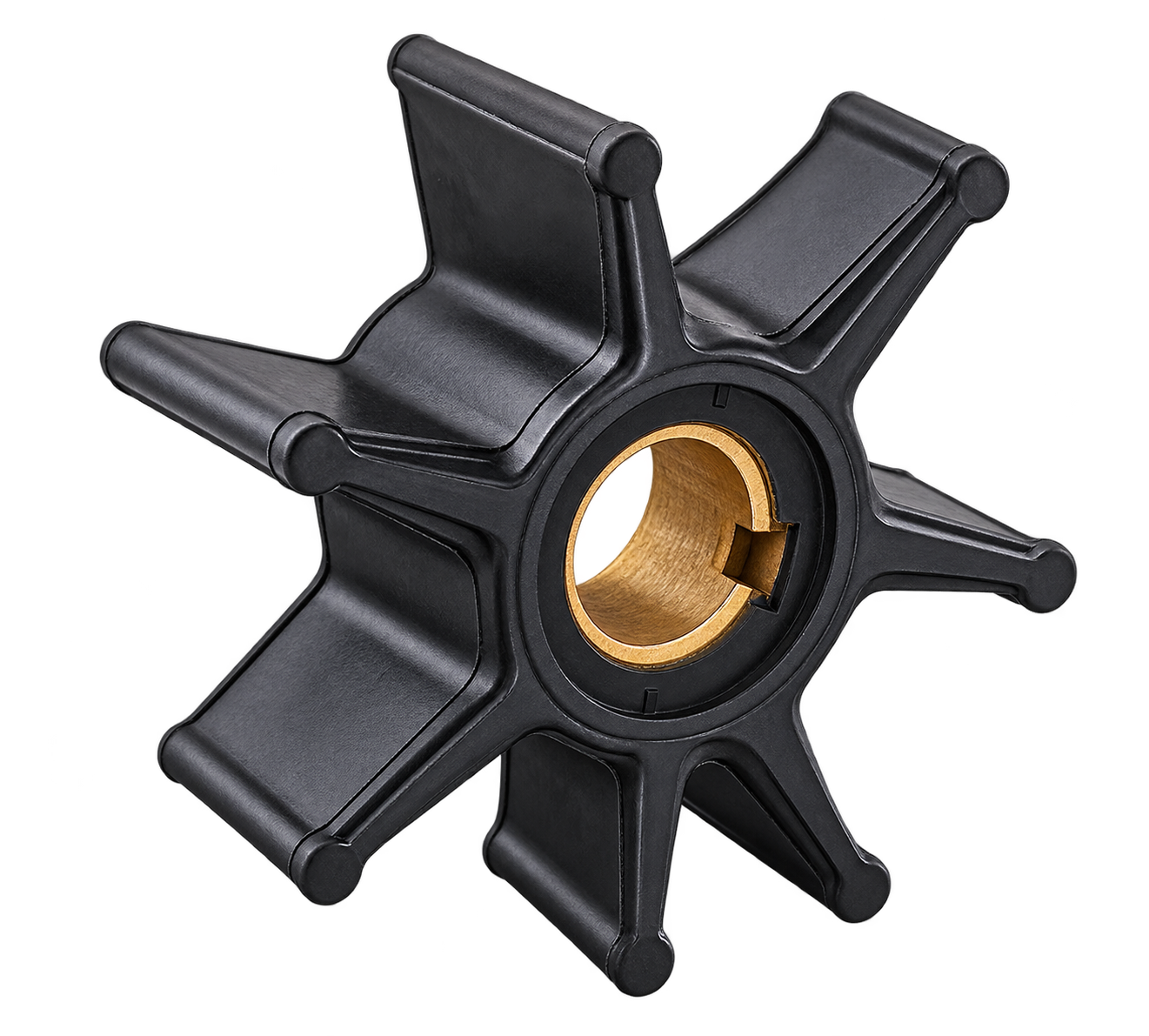
Your outboard's impeller is a small rubber component with flexible vanes that spin inside the water-pump housing. Its job is simple: pull water from outside the boat and push it through the engine to keep it cool. Without it, your engine overheats within minutes.
Despite its importance, the impeller is one of the most overlooked maintenance items on small boats. Many owners don't know when to replace it, what symptoms indicate trouble, or how impeller wear affects engine performance. This guide explains when to replace your impeller, why timing matters, how to spot early symptoms, and what happens if you ignore the warning signs.
Why Impeller Replacement Matters
The impeller is made of rubber. Over time rubber dries out, cracks, stiffens, loses flexibility, becomes brittle, and wears unevenly. When the vanes can't flex properly, the pump loses pressure, cooling water flow drops, and the engine overheats.
Overheating is one of the fastest ways to damage an outboard. It can cause warped heads, melted pistons, scored cylinders, blown head gaskets, failed thermostats, and damaged sensors. A $20–$40 impeller prevents a $1,000–$4,000 repair.
Recommended Impeller Replacement Intervals
Most manufacturers recommend replacing the impeller every 2–3 years for recreational use — but there are important exceptions.
Replace every year if you run in sandy or silty water, operate in shallow rivers, beach your boat frequently, run in weedy lakes, store the engine for long periods, or run high hours (150+ per season). Replace immediately if the tell-tale stream weakens, the engine overheats, you sucked up sand or debris, the impeller sat dry for months, or you bought a used engine with unknown history.
AftLog tracks impeller intervals automatically based on your engine model and logged hours.
Symptoms of a Worn or Failing Impeller
Impeller failure rarely happens suddenly. Instead, symptoms appear gradually — if you know what to look for:
- Weak or intermittent tell-tale stream — the most common early warning sign. A healthy impeller produces a strong, steady stream; a failing one produces weak flow, sputtering flow, delayed flow after startup, or flow that disappears at idle.
- Engine overheating — if the temperature alarm sounds, check the impeller first.
- High idle temperature — if idle temps creep higher over time, the impeller may be losing efficiency.
- Steam in the tell-tale — indicates hot water and restricted flow.
- No tell-tale at startup — if it doesn't appear within 5–10 seconds, shut down immediately.
- Debris in the water-pump housing — sand, silt, or weeds can damage the vanes.
- Rubber smell — a faint burning-rubber smell can indicate vane friction or failure.
What Happens If You Don't Replace the Impeller
- Vanes stiffen — cooling efficiency drops.
- Vanes crack — water flow becomes inconsistent.
- Vanes break off — pieces of rubber travel through the cooling system.
- Water passages clog — overheating becomes severe.
- Engine overheats — the temperature alarm sounds.
- Internal damage — pistons, cylinders, and head gaskets fail.
- Engine shutdown — severe overheating forces an emergency stop.
Replacing the impeller every 2–3 years prevents all of this.
How Impeller Replacement Works
Impeller replacement is moderately simple and takes 30–60 minutes.
- Remove the lower unit — unbolt the gearcase from the midsection.
- Access the water-pump housing — located on top of the lower unit.
- Remove the housing — inspect for sand, silt, or debris.
- Remove the old impeller — check for missing vanes.
- Install the new impeller — lubricate with water-pump grease.
- Replace the housing gasket — ensures proper sealing.
- Reinstall the lower unit — align the driveshaft and shift shaft.
- Test the tell-tale — start the engine and verify strong flow.
If vanes are missing, the cooling passages may need flushing.
DIY vs. Professional Replacement
Impeller replacement is DIY-friendly if you're comfortable removing the lower unit, your engine is small (2–60 HP), bolts are accessible, and you have a manual. Use a professional if your engine is large (90–300 HP), bolts are corroded, you suspect overheating damage, vanes are missing, or you want a full cooling-system inspection.
How AftLog Helps
AftLog automatically tracks impeller intervals, logs replacement dates, stores photos of impeller condition, notes symptoms (weak tell-tale, overheating), reminds you when service is due, and links to your engine's maintenance schedule.
Checklist: Impeller Replacement
- Remove the lower unit
- Inspect the housing for debris
- Remove the old impeller
- Check for missing vanes
- Install the new impeller
- Replace the gasket
- Reinstall the lower unit
- Test the tell-tale
- Log the service in AftLog
Summary
Your impeller is the heart of your cooling system. Replacing it every 2–3 years — or sooner in harsh conditions — prevents overheating, protects your engine, and ensures reliable performance. By watching for symptoms like weak tell-tale flow and rising temperatures, you can catch impeller wear early and avoid costly repairs.
AftLog tracks your intervals automatically, so you never miss a replacement.
Track these on your boat with AftLog — free to start, $29 lifetime Pro.